Investigations reported
OJJDP 2022 Annual Report ↗DFX1 FORENSICS LLC · LAW ENFORCEMENT
Designed by experienced
law enforcement.
For law enforcement.
Built from firsthand experience serving search warrants, conducting ICAC investigations, and examining digital evidence.
DFX1 Forensics LLC was founded by a retired investigator and digital forensic examiner, with development shaped by ICAC task force experience. DF-X1 addresses a problem encountered in the field: how to learn more about seized media without first connecting it to an agency computer.
Discuss an agency demonstration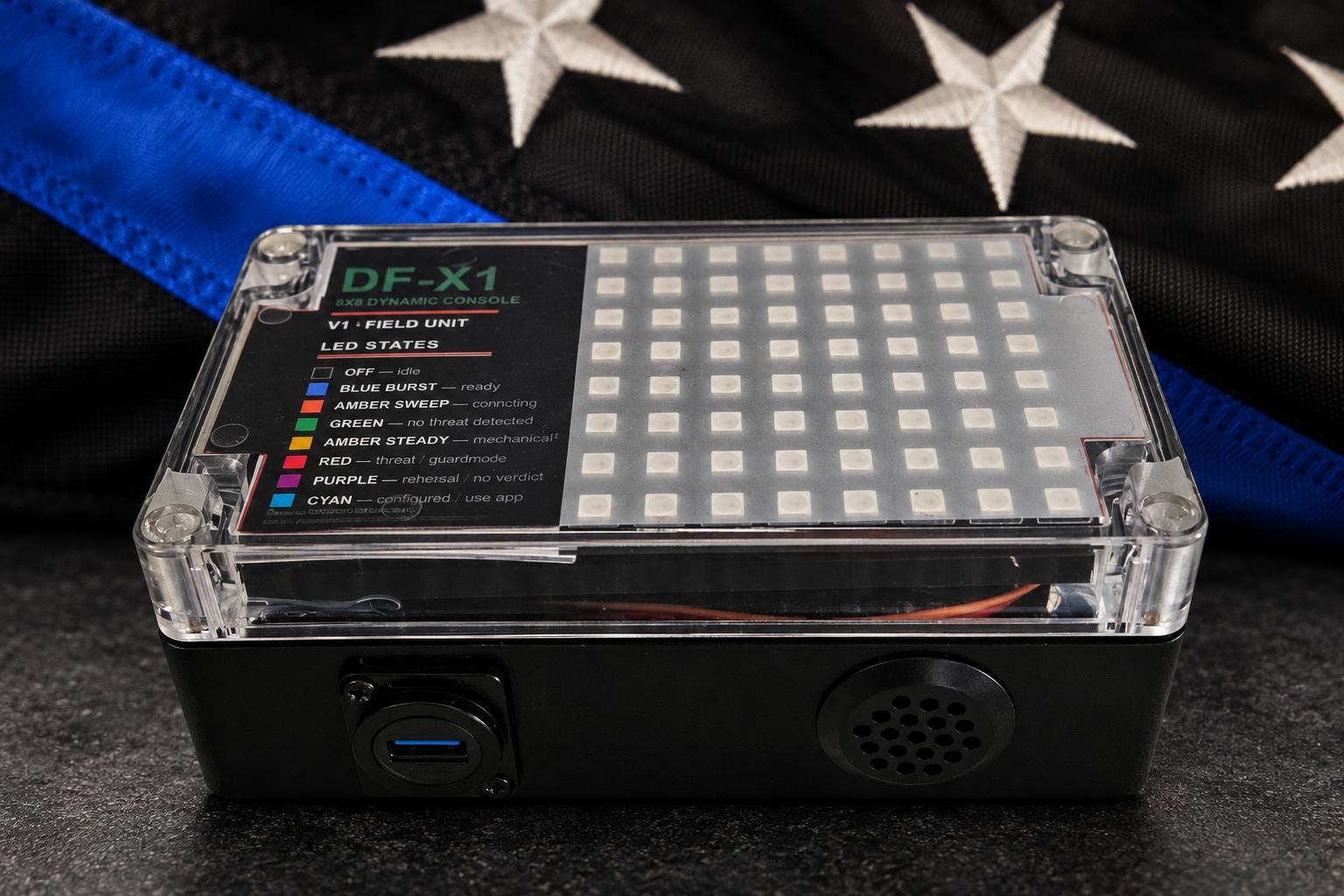
THE NATIONAL ICAC WORKLOAD
Growing workload.
The same urgent mission.
ICAC investigators work across a national network of 61 task forces and more than 6,200 law enforcement and prosecutorial agencies. OJJDP’s published figures show the scale of the investigations they handle.
Investigations reported
OJJDP 2023 Annual Report ↗Investigations reported
OJJDP program overview ↗In 2025, those investigations led to more than 17,000 arrests. Approximately 73,000 officers, prosecutors, and other professionals received training that year.
The year labels follow the sources: 2022 and 2023 figures cover federal fiscal years; the current OJJDP overview labels its latest figures “2025.” These are reported workload snapshots, not a calculated like-for-like growth rate.
A national effort since 1998.
Cumulative totals reported in OJJDP’s FY 2023 Annual Report:
1.6 millionReports of online child exploitation reviewed
Nearly 140,000People arrested since the program began
923,000+Law enforcement officers, prosecutors, and other professionals trained
Source: OJJDP 2023 Annual Report, printed pages 20–21. Separately, the ICAC program website reports more than 194,000 community outreach presentations since 1998. Sources reviewed October 29, 2026.
WHY WE BUILT IT
The search is happening now.
The questions can’t always wait.
At a search warrant, a handful of thumb drives can leave an investigator with an immediate question: which media needs attention first? Sending everything to the lab leaves that question unanswered at the scene. Previewing it on an ordinary laptop can expose agency systems to malware, alter files, and require the investigator to view sensitive imagery.
DF-X1 gives investigators a dedicated screening step. A small, standalone console can examine supported media while the search and interviews continue—without needing a host laptop or an internet connection during screening.
For a smaller department without its own forensic laboratory or full-time examiner, that puts an additional investigative tool closer to the person handling the evidence.
WHAT DF-X1 DOES
Screen the threat.
Identify the match.
Keep the record.
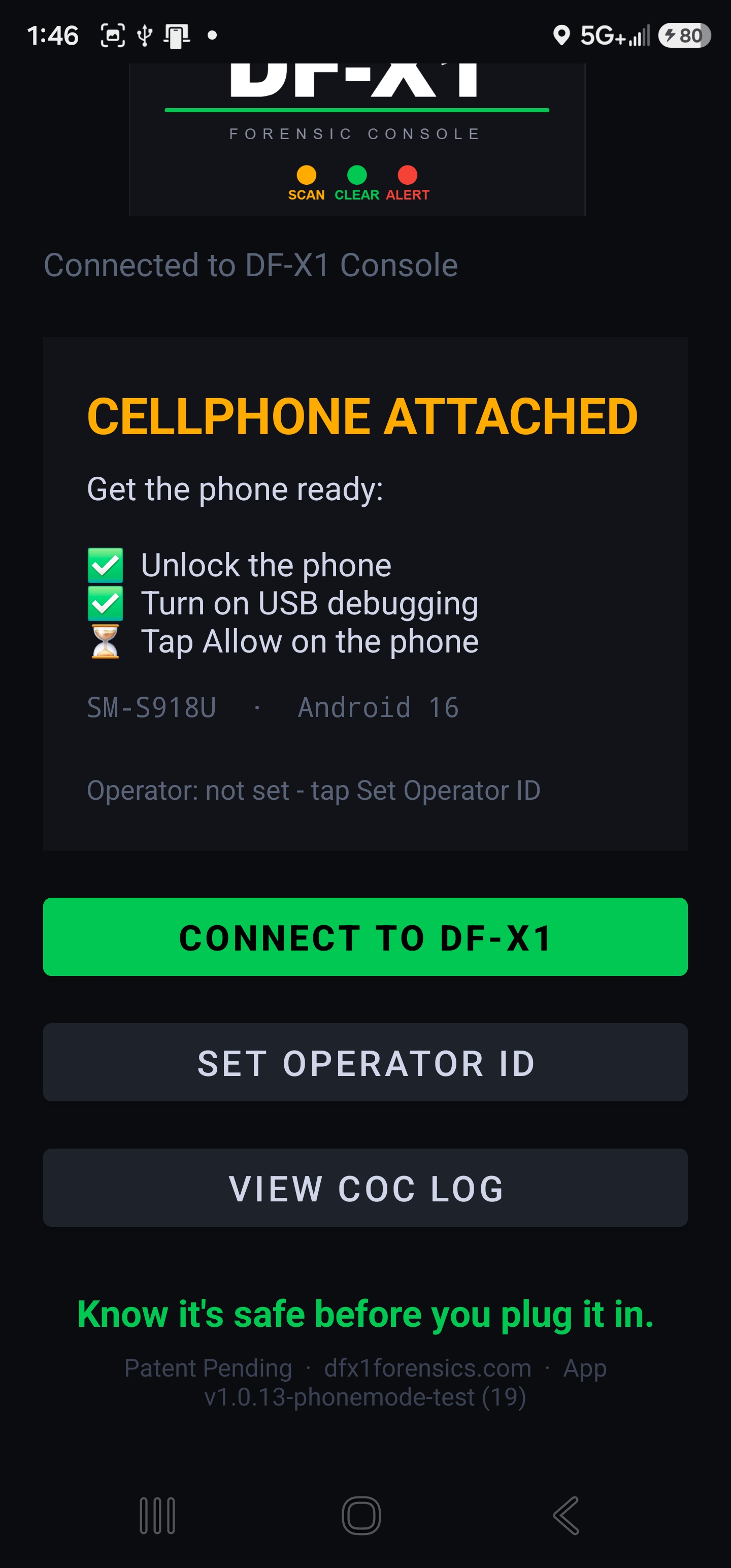
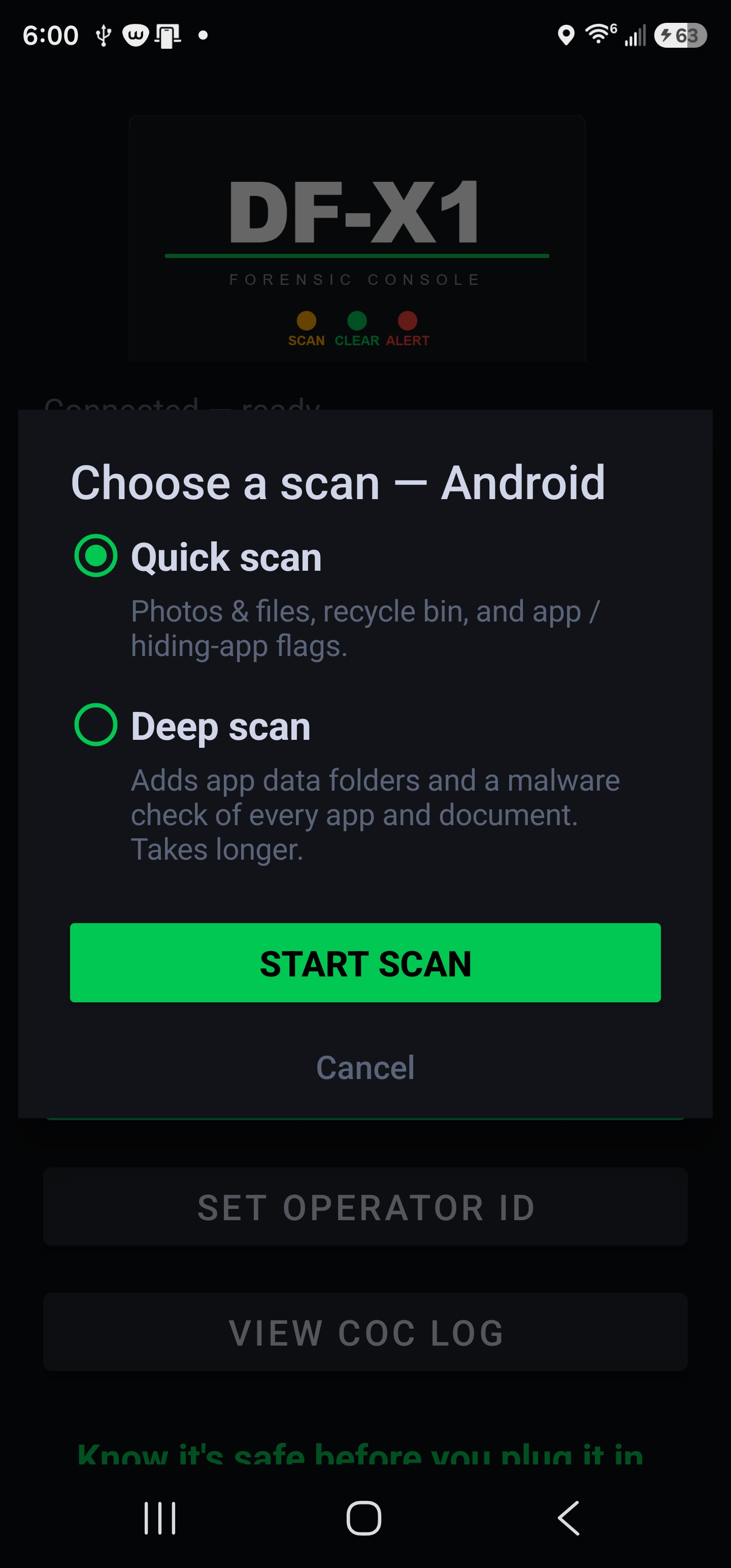
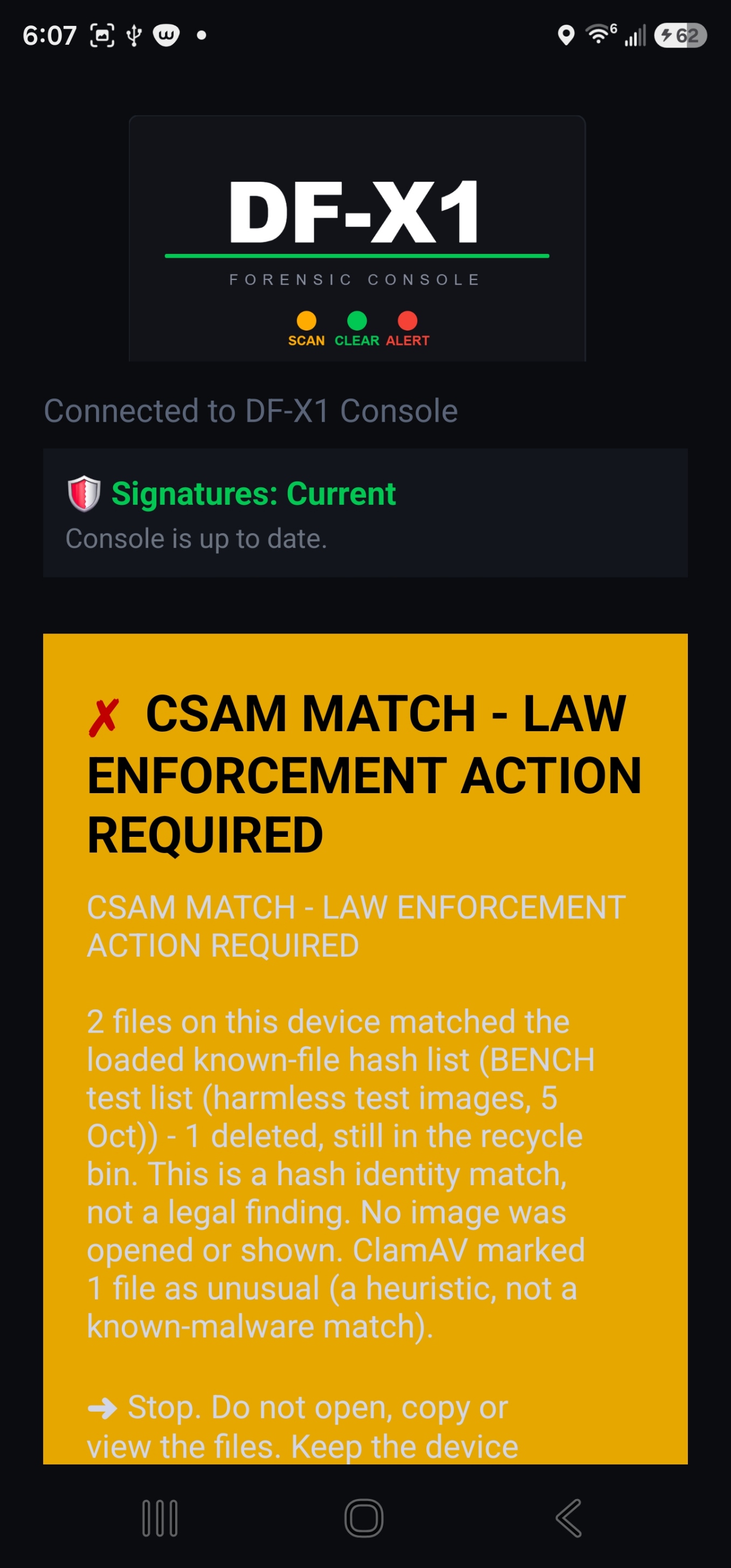
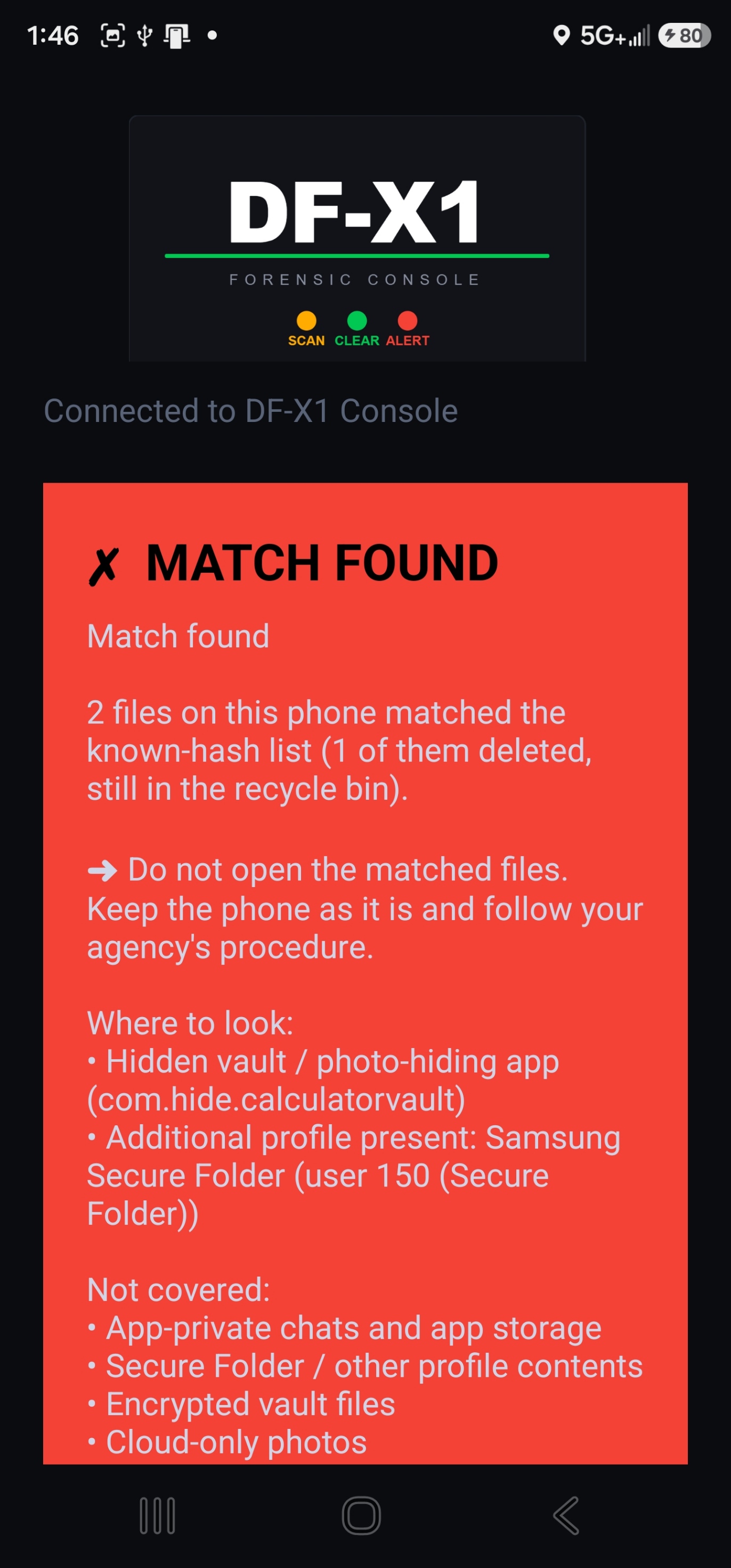
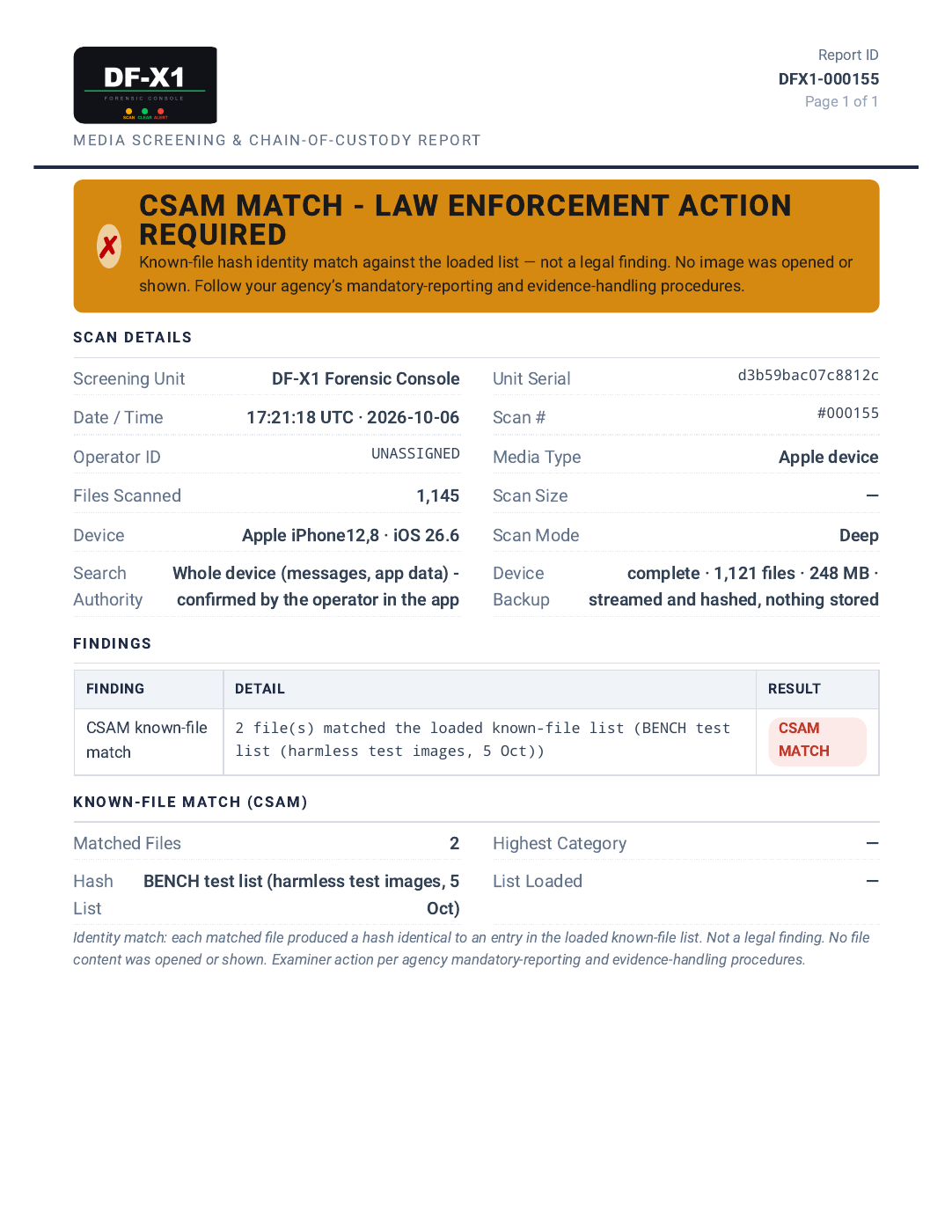
Bench-test examples from earlier app builds. The report uses a harmless test hash list.
Check before the agency computer.
Screen supported removable media with layered malware detection before its next connection. Review detected threats and suspicious findings before deciding how the media should move into the examination workflow.
No host PC required.Identify matches without displaying images.
Compare accessible files on supported media and unlocked phones against a loaded known-file hash list. A match helps investigators identify media for further attention without displaying the matched images during triage.
Review findings in the companion app.Member agency?
Add your Project VIC hash setPhone screening identifies known-file hash matches; it is separate from removable-media malware screening.
Preserve the original. Document the check.
Mount supported storage media read-only, blocking writes through the mounted filesystem during screening. Record findings and available before-and-after content hashes in a tamper-evident chain-of-custody log.
A record behind the result.Phone workflows use a different access method and do not apply the storage-media write block.
BUILT FROM THE WORK
We needed this tool
at the scene.
During an ICAC search warrant, DF-X1’s founder collected a handful of thumb drives from a suspect’s desk while interviews were taking place nearby. He wanted a dedicated way to screen those drives while the investigation was still unfolding.
That experience shaped DF-X1: a portable console that works independently, gives the investigator a clear result to review, and retains a record of what was checked.
Known-file screening supports investigative prioritization. Examination, interpretation, and charging decisions remain part of the agency’s established process.
Talk with the team behind DF-X1